Meet Your Land Rover Tire Expert at Land Rover West Broward
Meet Your Land Rover Tire Expert at Land Rover West Broward
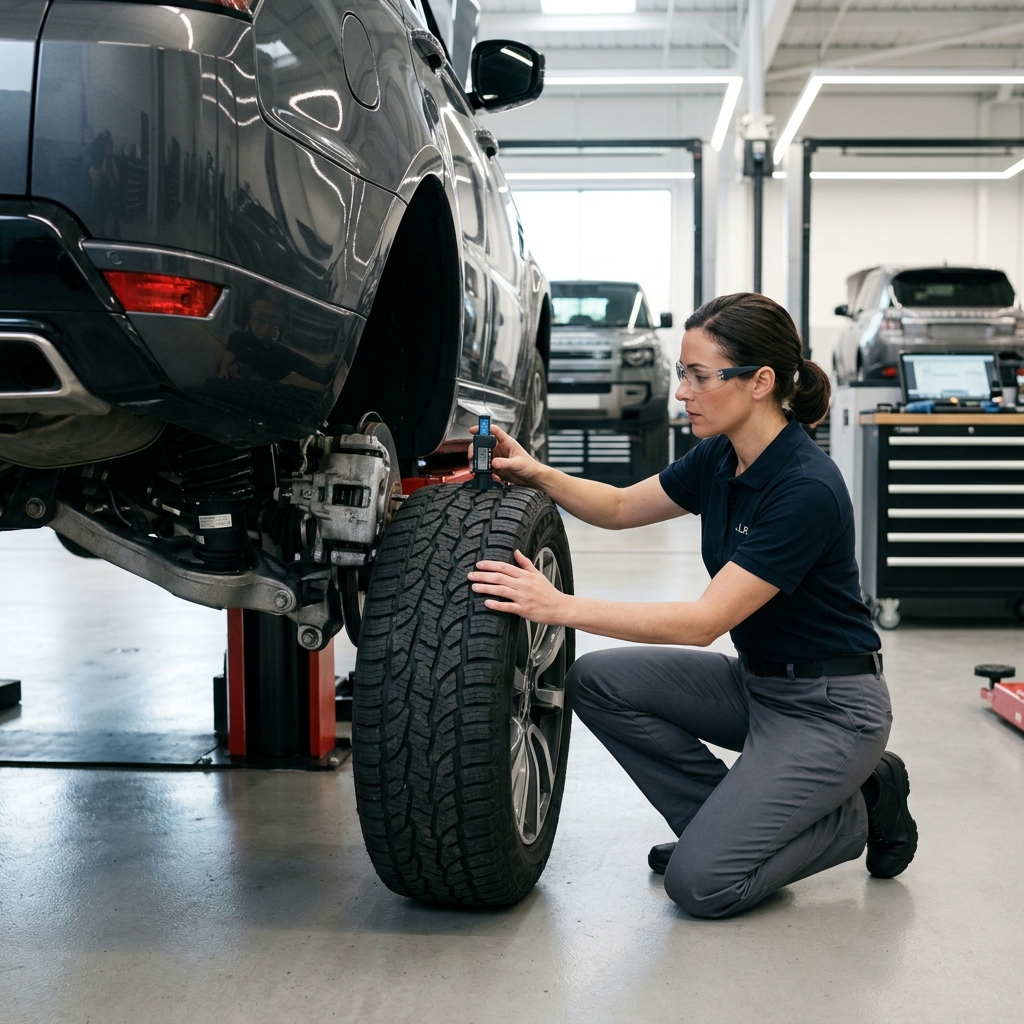
Welcome to an exclusive, in-depth Q&A session with our Lead Service Advisor at Land Rover West Broward, located in beautiful Davie, FL. When it comes to maintaining the legendary capability, safety, and refined comfort of your luxury SUV, few components play a more critical role than your tires. As the sole point of contact between your sophisticated vehicle and the road—or the rugged trail—your tires dictate how your vehicle handles South Florida’s sudden summer downpours, how quietly it cruises down I-75, and how confidently it conquers weekend off-road excursions.
In this masterclass, our resident expert shares years of specialized luxury automotive experience to demystify tire selection, maintenance, and advanced engineering characteristics unique to the Land Rover lineup. Whether you drive a Range Rover, Range Rover Sport, Defender, or Discovery, this comprehensive discussion is designed to empower you with practical knowledge. You will learn how to read your tire sidewalls, understand the rigorous co-engineering behind original equipment tires, optimize pressures for varied terrains, and preserve your advanced air suspension system. Read on to discover how premium rubber preserves the DNA of your British luxury machine.
Q: How do I find the specific tire size on my Land Rover?
Finding the precise tire size is the foundational first step to maintaining your vehicle’s factory-designed dynamics. Our advisor points out that owners have three highly reliable sources. The most immediate physical location is the tire information placard located on the driver’s side B-pillar door jamb. This decal lists the front and rear original equipment sizes alongside recommended cold inflation pressures. Alternatively, your comprehensive Owner’s Manual contains full technical listings for every engine option and wheel diameter available for your specific model year.
You can also read the sidewall code directly on your current tires. A sequence such as 275/45R21 contains critical metrics: ‘275’ represents the nominal section width in millimeters, ’45’ is the aspect ratio (the sidewall height is 45% of the width), ‘R’ denotes radial construction, and ’21’ indicates the diameter of the wheel in inches. Matching these dimensions exactly is not merely a matter of physical fitment; it is an absolute necessity for your vehicle’s highly sensitive electronic traction controls, Terrain Response system, and all-wheel-drive differentials.
Our advisor shares a frequent workshop scenario: ‘We often see guests who try to mount non-standard sizes in search of a softer ride or aggressive aesthetics. However, even a minor variance in rolling overall diameter can confuse the vehicle’s Dynamic Stability Control (DSC). If the rolling speeds of the wheels vary beyond a tiny percentage, the onboard computers assume a slip condition is occurring. This can lead to unwanted ABS interventions, sluggish acceleration, or premature differential wear.’
For this reason, keeping your tire dimensions aligned with factory guidelines is essential. Our team in Davie is trained to verify not only the physical size but also the load index and speed rating—two metrics that are equally critical to withstanding the substantial curb weight and high performance of a luxury Land Rover vehicle under various highway loads.
Q: What is the significance of the LR marking on Land Rover tires?
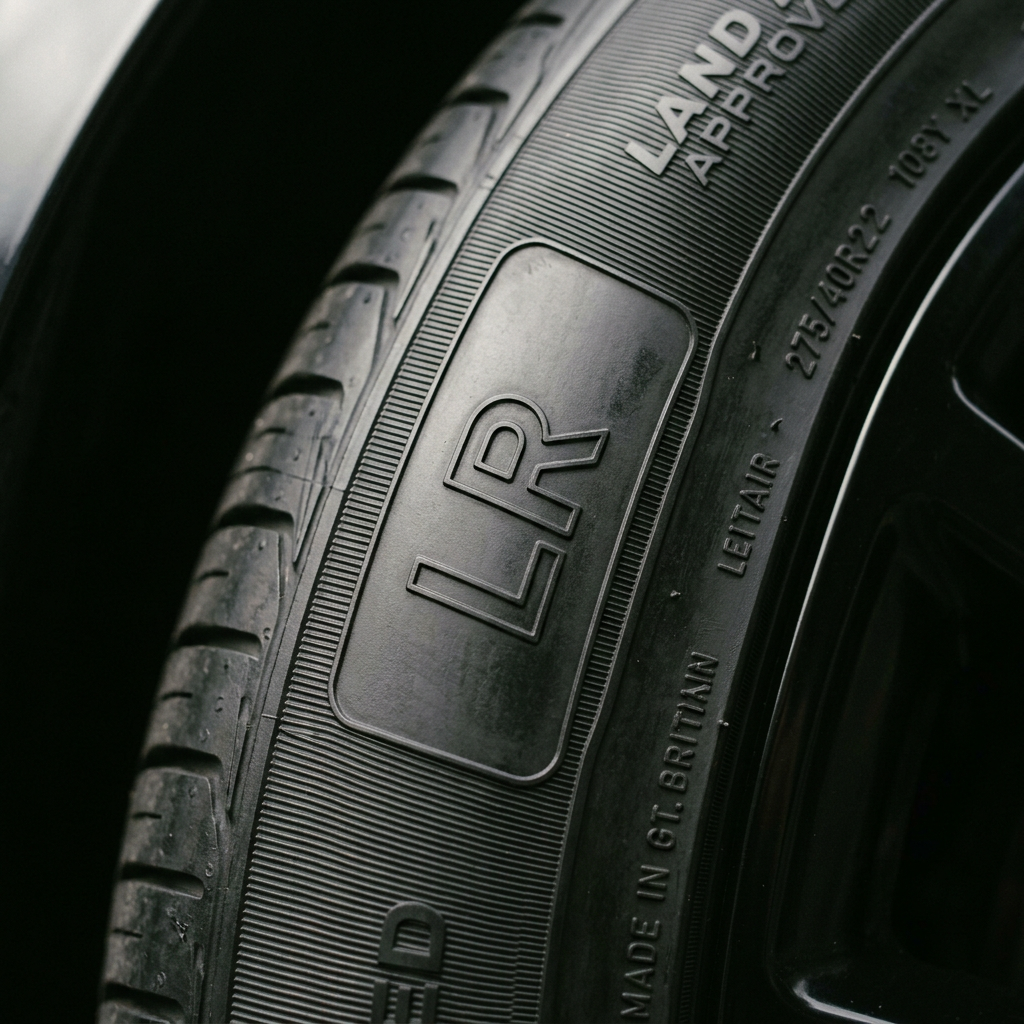
When inspecting the sidewall of a premium tire, you may notice a subtle, molded ‘LR’ stamp. This is not a stylistic addition; it is the manufacturer’s mark of co-engineering. Tires featuring this designation are developed in tight partnership with major tire brands like Pirelli, Michelin, and Continental. These compounds are specifically formulated to meet the exact weight distributions, suspension characteristics, and high-performance requirements of modern luxury SUVs.
Our advisor notes: ‘An LR-marked tire undergoes up to three years of rigorous track, off-road, and acoustic testing before receiving approval. The tread pattern is optimized to reduce high-speed highway cabin hum, while the internal steel belts and sidewall stiffeners are tuned to complement our air suspension dampening rates. Using generic tires without this specification can lead to a harsher ride quality and elevated cabin noise—subtle differences that detract from the cabin’s legendary refinement.’
Q: Do cheap tires wear out faster on heavy SUVs like the Range Rover Sport?
Massive Torque Demands
High-torque powertrains place immense physical strain on rubber treads. Budget compounds lack the molecular elasticity to withstand these forces, which leads to rapid tread block degradation, localized chipping, and accelerated wear under everyday acceleration.
Heavy Curb Weight
A Range Rover Sport or full-sized Defender easily weighs between 5,000 and 6,000 pounds. This substantial mass exerts constant downward force, accelerating friction and heat buildup within budget sidewalls that are not structurally optimized for these loads.
Total Lifetime Cost
While cheap tires have lower initial costs, they must be replaced twice as often. Investing in high-grade premium tires pays dividends through extended tread life, superior wet-weather braking safety, and a much smoother, quieter ride.
Q: What are the handling trade-offs of all-terrain tires on dry highways?
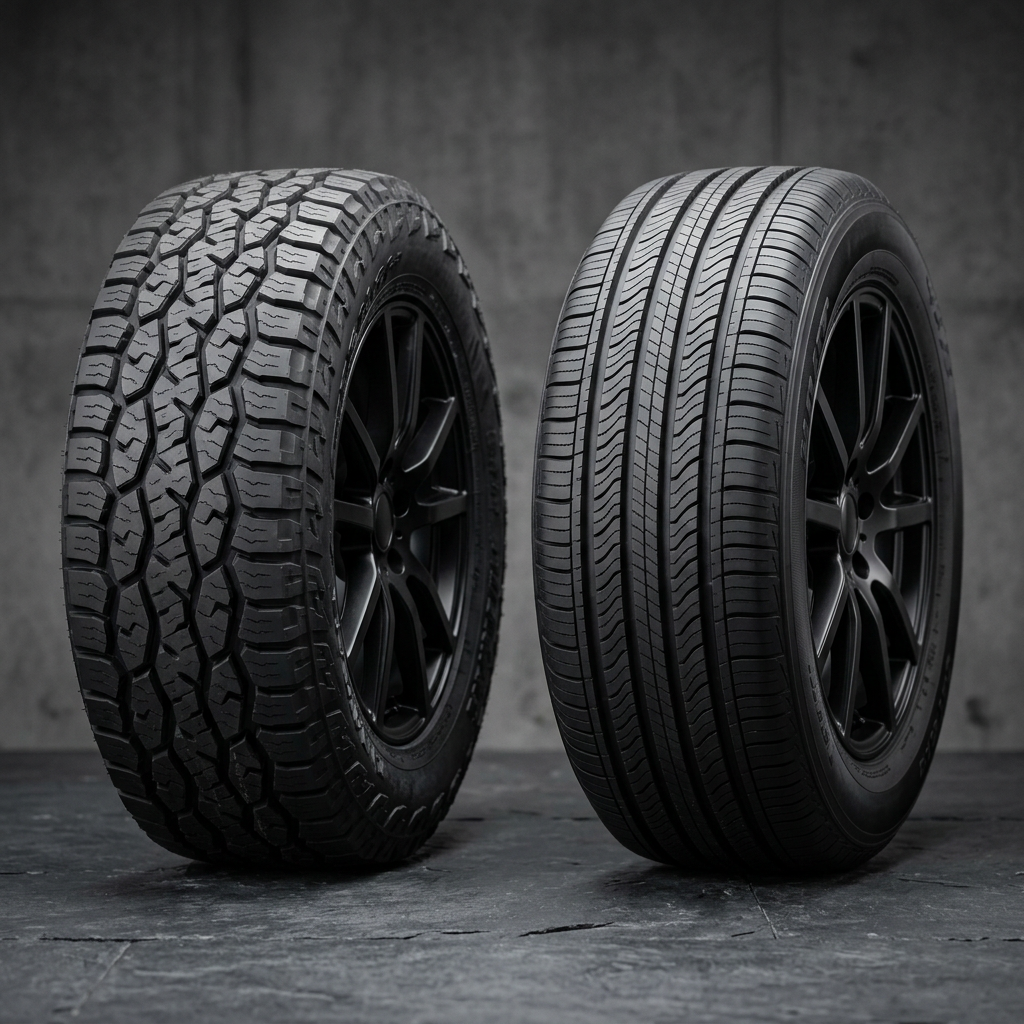
For South Florida drivers navigating major arteries like I-75 and I-595 daily, choosing all-terrain tires requires understanding the direct handling trade-offs. All-terrain options feature deeper, wider tread blocks designed to grip loose dirt, mud, and sand. However, when transitioning to hot, dry Florida asphalt, these large blocks experience ‘tread squirm’—a minor flexing under lateral loads that can make high-speed cornering feel slightly less sharp compared to responsive highway-terrain compounds.
Additionally, the open tread design allows more air to flow through the tire grooves, creating a louder acoustic hum at 70 mph. Wet braking distances on slick highways can also be slightly longer because of a reduced rubber contact patch compared to dedicated summer or premium highway all-season tires. Our advisor recommends assessing your actual driving habits: if 90% of your mileage is highway-based, a premium highway all-season tire will provide a more refined, quiet, and secure daily commute.
Q: What are the off-road tire pressure settings for a Range Rover?
Venturing off-road requires a fundamental shift in how you manage your tires. Lowering your tire pressure—often called ‘airing down’—is a standard technique used to increase the tire’s contact patch. A wider and longer footprint distributes the vehicle’s weight more evenly, preventing the tires from digging into soft sand or mud and dramatically improving traction over loose rock formations. For deep sand or soft mud, dropping pressures to approximately 18 to 22 PSI is common, depending on your load.
However, our advisor issues a critical warning: ‘Airing down must be done with extreme care. When running at low pressures, the tire sidewalls bulge significantly and are highly vulnerable to sharp rocks or roots. Sharp steering inputs at speed can also cause the tire bead to unseat from the wheel rim, resulting in immediate pressure loss. Always drive at slow, controlled speeds when aired down, and never exceed 15-20 mph on lowered pressures.’
As soon as you return to asphalt, you must immediately return the tires to their standard street pressures. Driving on paved roads at high speeds with underinflated tires causes rapid heat buildup, which can structurally damage the tire’s internal carcass within miles. Use your vehicle’s Tire Pressure Monitoring System (TPMS) display to verify all four tires have safely returned to their factory-specified cold ratings before joining highway traffic.
Q: Do Land Rover air suspension systems affect wheel alignment?
The Geometry Link
As electronic air suspension changes the vehicle’s ride height (e.g., lowering at highway speeds or raising for off-road clearance), the suspension geometry alters camber and toe angles. Keeping this dynamic system perfectly calibrated is essential.
Tight Tolerance Mode
To perform a true alignment, technicians must lock the air suspension into ‘Tight Tolerance Mode’ using diagnostic software. Standard alignment racks cannot do this, which can result in incorrect angles that cause rapid, uneven tire wear.
The Risk of Neglect
Failing to align your air suspension correctly results in inner-edge wear on your rear tires, which can ruin a brand-new set of luxury tires within 8,000 miles. Trusting certified Land Rover specialists keeps your vehicle tracking straight.
Q: How often should I rotate and balance my Land Rover tires?
To maintain even tread wear and maximize the life of your investment, our advisor recommends rotating and balancing your tires every 5,000 to 7,500 miles, or at least once every six months. Because of Land Rover’s permanent all-wheel-drive system, each axle experiences different steering and power forces. The front tires bear the steering friction and lateral forces during turns, while the rear tires handle consistent forward thrust. Left unrotated, front tires will wear out significantly faster, particularly on their outer shoulders.
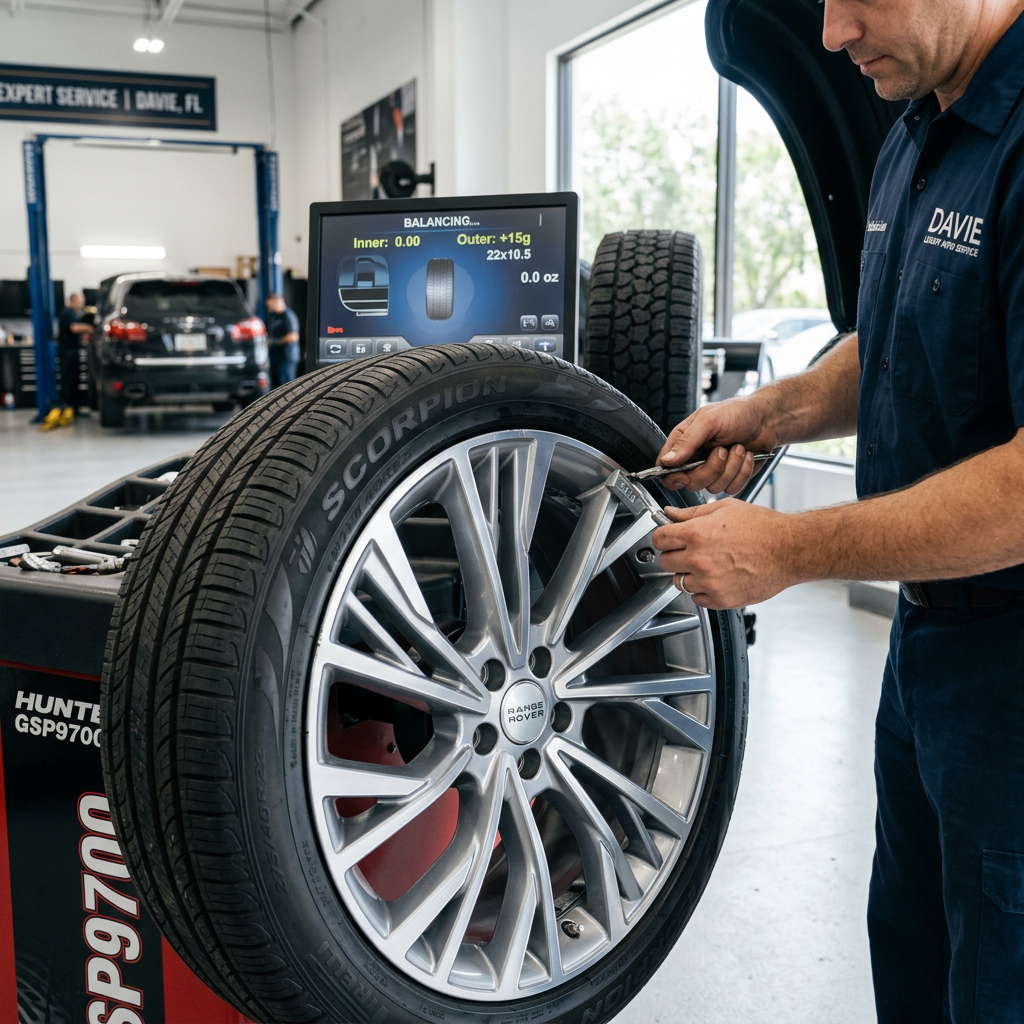
Balancing is equally critical. Even a tiny weight imbalance of 0.25 ounces can cause a noticeable vibration in your luxury cabin at highway speeds. During our professional balance service, we place each assembly on a high-speed balancer to detect heavy spots, correcting them with precise weight placements. This ensures a glass-smooth ride across all speeds.
Q: What should I do if my tire pressure monitoring system (TPMS) light comes on?
If the amber TPMS icon illuminates on your digital instrument cluster, do not panic, but do address it promptly. Your TPMS constantly monitors the air pressure within all four tires to keep you safe. In South Florida, seasonal temperature shifts can trigger the light. For every 10-degree drop in ambient temperature, your tire pressure drops by approximately 1 PSI. This means a sudden cool morning in Davie can trigger the warning light.
Your first step is to pull over safely and visually inspect all four tires for obvious punctures, cuts, or flats. If everything looks stable, check your instrument panel’s tire monitoring menu to identify which tire is low. Use a reliable hand gauge to check the pressure and inflate the tire to the recommended PSI listed on your door B-pillar. If the light remains illuminated after driving a few miles, or if one tire is consistently losing air, visit our service team to inspect for embedded nails or slow leaks.
Our advisor shares a crucial tip: ‘Many drivers overlook the spare tire. Some Land Rover models feature a full-sized spare equipped with a TPMS sensor. If your four main tires are perfectly inflated but the light won’t turn off, check the spare. It can slowly lose pressure over time and trigger the dashboard light.’
For immediate peace of mind, our service center in Davie is always ready to quickly check your tire pressures, run a diagnostic scan on your TPMS sensors, and get you back on the road safely.
Schedule Your Land Rover Tire Service in Davie, FL Today
Keeping your luxury SUV’s tires in peak condition is vital for your safety, driving comfort, and the longevity of your vehicle. At Land Rover West Broward and Service Center, our certified technicians have the specialized equipment and deep expertise needed to care for your vehicle’s complex suspension and traction systems.
Whether you need a simple pressure check, a precise wheel alignment in ‘Tight Tolerance Mode’, a tire rotation, or a brand-new set of original equipment, LR-marked tires, we are here to help. Contact us today or visit our state-of-the-art facility in Davie to experience premium automotive care.